
Ulli Diemer — Radical Digressions
Blogs & Notes
Articles Lists
- Selected Articles
- Articles in English
- Articles in French
- Articles in Spanish
- Articles in German
- Articles in Other Languages
- Articles A-Z
- Subject Index
Compilations & Resources
- Connexions
- Other Voices newsletter
- Seeds of Fire
- Alternative Media List
- Manifestos & Visions
- Marxism page
- Socialism page
- Organizing Resources
- People’s History, Memory, Archives
- Connexions Quotations page
- Sources
- What I’ve been reading
- What I’ve been watching
Selected Topics
- Alternative Media
- Bullshit
- Censorship
- Civil Liberties
- Collective Memory
- Community Organizing
- Democratization
- Double Standards
- Free Speech
- Health Care
- History
- Identity Politics
- Interviews & Conversations
- Israel/Palestine
- Libertarian Socialism
- Marxism
- Men’s Issues
- Moments
- Nature
- Neo-Liberalism
- Obituaries & Tributes
- Political Humour/Satire
- Public Safety
- Self-Determination
- Socialism
- Revolution

When Ulli met Michael and Mina ... and Randa
By Ulli Diemer
It started in a library, as many of the exciting discoveries in my life have. Friends had invited me up to their cottage, where I got to experience trees, birds, toads, and swimming in the lake. But on this day, it was raining, and we were stuck indoors with a three-year-old who knew, and claimed to be bored by, every book, and every puzzle, that the cottage had to offer.
Off to the library! New books! New puzzles! I was curious to see what the library might have in store for us, given that the community we were going to has a population of 324. Actually, I was surprised a town that small would even have a library. But I was pleasantly surprised. The library turned out to be lovely, bright and spacious, and amply endowed with books. I spent some time browsing the local history section (busman’s holiday!) but then decided I might as well sit down and read for a while, given that our three-year-old pacesetter seemed determined to do every single puzzle that the library harboured.
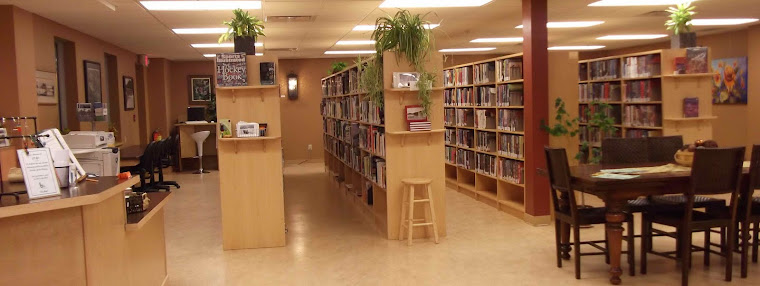
The library also offers comfortable chairs to sit in. One of them is next to the Teen/Young Adult section. So I grabbed a random book off that shelf and sat down to read.
OK, ‘random’ requires a bit of clarification here. I’m originally from Germany, and even though I have lived most of my life in Canada, I still have a Germanic soul. (I know, that sounds kind of racist, and if you claimed there was such a thing as a Germanic soul, yes, you’d be guilty of wrong-speak. But I’m German, so I get to make fun of people like me.)
Anyway, if someone else, someone who doesn’t have a Germanic soul, wanted to take a random book off the shelf, they might just grab a book from anywhere on the shelf. Not me. For me, selecting a book at random means taking the very first book on the left of the top shelf, whatever it happens to be. That’s what I did. The books, being fiction, were shelved by author. Which is how I discovered Randa Abdel-Fattah, who managed to claim the Number One spot by virtue of having a surname that begins with ‘A-B-D.’ And that is how I came to be sitting in the Teen section of the Baysville library with a copy of When Michael Met Mina in my hands.
There is this cliché that you shouldn’t judge a book by its cover. You won’t hear me say that. I do judge books by their covers, and I immediately loved the cover of When Michael Met Mina. (1) It’s a mad jumble of colours and text. (2) Text such as Stop the Boats! Stop the Hate! Halal funds ISIS! and No to Tabouli! And drawings of, among other things, a leaky boat and slices of pizza.

What is this book about? Except for the pizza, this doesn’t seem like your typical teen romance. I started reading....
The story begins at an anti-refugee protest, described from Michael’s point of view. Michael is there because his parents have started a group called Aussie Values which wants to send refugees back to wherever they came from, or at least to somewhere other than Australia. Michael doesn’t know much about the issues, but the idea that refugees who come by boat are ‘cheating’ because they are ‘jumping the queue’ for immigration to Australia sounds plausible to him, and offends his sense of fairness.
So there is Michael, holding a sign (No to Sharia Law) that someone has handed to him, looking across at the group of pro-refugee demonstrators who have come out to oppose Aussie Values.
And then he sees her. She’s on the other side, holding a sign that says It’s Not Illegal to Seek Asylum, and she’s the most beautiful girl he has ever seen. He can’t take his eyes off her. She doesn’t notice him.
But a few days later school starts, and there she is – Mina – in his class, a scholarship winner from the poor part of Sydney, newly enrolled in his private school. The book is structured around chapters narrated alternately by Michael and Mina, and now we see Michael through Mina’s eyes. In Society and Culture class he makes a comment about refugees ‘jumping the queue,’ and Mina, who arrived in Australia with her mother as a refugee, is not impressed. Not impressed at all.
But this is a romance novel, so I don’t think it even requires a spoiler alert to say that this is not the end of the story for Michael and Mina. Far from it.
There is an element of the old fairy-tales in When Michael Met Mina, the ones where the suitor has to pass a series of tests, whether fighting dragons or answering trick questions, in order to win over the princess. And while Mina is quite capable of fighting her own battles, thank you very much, Michael finds himself challenged in a way he never has been before in his short life. The dragons he has to confront and overcome are racism, Islamophobia, and hate, and the difficult questions that face him have to do with whether he can not only change how he thinks, but take a stand and act when a crisis arises.
I would have loved to know how it all turns out (will Mina and Michael end up fighting against racism together? more importantly, will they kiss?), but our three-year-old was ready for his next adventure, and, his parents hoped, a nap, so we had to leave the library when I was only a few short chapters in. But I was hooked, and when I got back to Toronto, I first tried my neighbourhood library, which didn’t have it, and then the used-book store, which did. I paid $4.99, brought my acquisition home, and proceeded to read the whole book. I liked it enough to lend it to a friend who, like me, is also not embarrassed to read a teen novel.
*
And then, a few days later, my friend and I found ourselves in a situation very much like the opening scene in When Michael Met Mina: a pro-immigrant, anti-hate rally confronting a right-wing anti-immigrant demonstration. The setting was Christie Pits, a park which is known and commemorated in Toronto as the scene of the Christie Pits Riot of 1933. As everyone on both sides knew, holding a right-wing rally in Christie Pits was, and was intended to be, a deliberate provocation. As soon news of the planned anti-immigrant demonstration spread, several weeks in advance, counter-organizing started. The first indications I saw on my walks through the park (I live a couple of blocks away) were grafittied slogans around the skateboard facility: “FASCIST-FREE SINCE '33!” Love those skateboarders! And amazing, when you think of it, that these young people knew the history of an event that happened in this place before their grandparents were born.
If a single place in Toronto could be held to symbolize opposition to fascism and racism, that place would be Christie Pits, because of that memorable night in August 1933. The occasion was a baseball game; a well-attended playoff match in which one of the clubs was Jewish. Tensions among the people watching were high: members of the Swastika Clubs, which had oozed into the open in Toronto after the Nazi seizure of power in Germany earlier that year, were out in force. As the game ended, members of the Swastika Clubs and their supporters unfurled a large swastika banner and began shouting “Heil Hitler.” Jews and their supporters attacked the Nazis, and after fierce fighting, managed to destroy the swastika banner.
That was just the beginning. More and more people arrived from the surrounding neighbourhoods and joined the fighting. Italians arrived by the truckload to support the Jews. The fighting spread into the streets. Baseball bats and lead pipes were used. Blood flowed. The fighting went on for hours. The Toronto Daily Star estimated that more than 10,000 people were involved.
The police were conspicuous by their absence. The police chief, Dennis Draper, notoriously right-wing and openly anti-Semitic, later summed up the cause of the riot in one sentence: ‘Hebrew people arrived and started trouble.’
So in 2025, faced with another right-wing provocation, several thousand of us (including a solid cohort of ‘Hebrew people’ I know from the Palestine solidarity movement) gathered in Christie Pits to show today’s fascists that they are unwelcome. As we faced off, separated by a line of police (there were 10 arrests) I found myself thinking of the opening scene of When Michael Met Mina. In that book, that opening confrontation is not a frozen endpoint, but a beginning, if not for everyone, then at least for the two principal characters.
The fundamental message that Randa Abdel-Fattah presents in her book is that it is possible for people to change. As Mina says, “never give up on anybody.” Of course, there is a time and place for engaging with people whose views are radically opposed to ours, and a confrontation in which we are shouting at each other separated by a line of police, is not that time or that place.
But I have to concede that my characterization of the people on the other side as “today’s fascists” is not really accurate. While the leaders have a clear and nasty agenda, some of the people they attract to their events are not so obviously ideologically committed. The leaders are adept at deploying what politically aware people recognize as racist dog-whistles, but some of those they attract do not recognize the subtext or the hidden intent of those slogans. They hear a term like ‘illegal immigrants’ and they take it at face value: that some people are not abiding by the rules and are breaking the law, which seems obviously wrong.
One of my colleagues at Connexions watched the right-wing marchers from the balcony of his apartment, which gave him a good view of the people they attracted. His first comment was that he was surprised at how many of them were not white. I noticed this too. It bears thinking about, because this seeming contradiction is not an isolated anomaly. For example, Germany’s right-wing anti-immigrant party, the AfD, has a surprising degree of support among immigrants, especially older immigrants who arrived in Germany decades ago. The contradictions go further: the AfD’s program calls for the defence of the ‘traditional family,’ yet its co-leader is a lesbian who is married to a woman who was born in Sri Lanka; they have two children. The Left has a tendency to simply ignore political complexities and contradictions which don’t fit neatly into our ideological preconceptions. All too often, we don’t understand why people are attracted to ‘populist’ movements and we don’t know what to say to them.
*
A few years ago, during the pandemic, there were what were called ‘Truckers’ Protests’ in Ottawa and other Canadian cities, including Toronto. Most of the participants were not in fact truckers, but the label stuck, though the participants preferred the name “Freedom Convoy.”
The movement did in fact start with cross-border truckers who were protesting against the imposition of rules which required all truck drivers to be vaccinated against Covid-19. Some 85% of truckers were vaccinated, but an estimated 15%, about 16,000 drivers, were not. They objected to mandatory vaccination, insisting that vaccination should be a matter of personal choice. They were joined by others who also saw the issue as one of personal freedom, many believing that this was another instance of governments undermining personal freedom, especially in the context of unprecedented restrictions imposed by government as anti-pandemic measures. The composition and political views of the protesters varied considerably; there was no one political direction or ideology. The media, for the most part, portrayed the movement negatively, casting it as ‘populist’ and by implication reactionary.
My Facebook feed was full of alarmed posts from my contacts, who skew heavily to being left-wing, denouncing the people participating in these protests as ‘Nazis’ and ‘white supremacists.’ As far as I could tell, however, none of the people I knew had actually been to any of the protests. They were just repeating what the mainstream media were reporting, and what people on social media, prompted by algorithms and armed with simple-minded memes, were amplifying.
I’m a Marxist. I don’t trust the media, I don’t trust the government, and I don’t trust the police. They misrepresent and lie about protests and social movements all the time. I have experienced this over more than 50 years of organizing and activism, including some 25 years in the Palestine solidarity movement, where being smeared, misrepresented, and lied about is part of daily life. So when I encounter a situation where the media, the government, and the police all agree, and I’m told to accept what they say, I’m suspicious. What, they’ve suddenly stopped lying?
As it happens, I live within walking distance of the Ontario Legislature, where a number of the ‘Freedom Convoy’ protests took place. So I did the obvious thing – not so obvious to my Facebook contacts, apparently, but obvious to me – I walked over to check it out in person. Subsequently, I wrote about what I observed and experienced, which netted me quite a bit of flack.
One of the very first things I noticed as I arrived, in addition to the smell of marijuana smoke, was the diversity of the people. If this was supposed to be a white supremacist gathering, someone forgot to tell the non-white people who formed a significant part of the crowd. If it was about returning Canada to its Christian values, someone forgot to tell the men with turbans, the women with hijabs, and the Indigenous people. Visually, it was typical Toronto: the kind of mix you see every day if you travel on the subway or the streetcar. The crowd looked to be about 50-50 male-female, predominantly on the younger side, especially if you counted the kids in strollers, of whom there were quite a few. I thought, this is how we do politics in this land: it’s snowy, the temperature is minus 10, and the little ones are out there in their strollers, or rolling around in the snow in their snowsuits. (“Mon pays, ce n’est pas un pays, c’est l’hiver!”)
I took in the crowd, probably a couple of thousand people, and then from the front, I heard a sound, a sound familiar to me from other outdoor rallies. Indigenous participants in the protest were doing a welcoming ceremony, drumming and chanting. They invited the crowd to join in, and hundreds of voices rose up together. It was a powerful moment. It was also a moment that said, rather clearly, that labelling protests like this as ‘white supremacist’ or ‘fascist’ is to miss the complexity and contradictions of what, for lack of a better term, might be called ‘populism.’
As I looked around, I asked myself: What are the politics of this protest?
I saw Canadian flags. Lots of people holding Canadian flags. People on the ‘progressive’ side of the political spectrum are often wired to see flags as an inherently reactionary symbol. It’s clear, though, that most people don’t see it that way, and if you automatically write off people just because they are holding or displaying a flag, you are cutting yourself off from many of the people you need to talk to build a movement for social justice. (At the Christie Pits confrontation in September 2025, there were Canadian flags to be seen on both sides. One of the anti-racist demonstrators, asked why he had a Canadian flag, said ‘It’s my flag, and they [the right] aren’t taking it away from me.’)
Here, in Queen’s Park in February 2022, there were many signs, most of them home-made, with a variety of messages. The signs suggested that the diversity of the protest was not restricted to the composition of the crowd, but extended to people’s reasons for being there. I thought of the joke about what diversity means in a university today: ‘people who look different but think the same.’ What I was seeing here, I thought, was people who look different and think differently.
There were signs with what might be called negative messages, and signs with positive messages, with the latter predominant. The negative ones were mostly aimed at the media, and the Prime Minister. “The Media Lie” was a common message. There were signs that said “Together for Freedom” and “United We Are Stronger.” I saw quite a few signs with the slogan “Love Not Hate,” which in Canada is very much associated with the late NDP leader Jack Layton, a progressive icon whose final message before his death said “Love is stronger than hate.”
A few signs indicated that the holder had personally been vaccinated, but that they opposed government mandates to compel people to be vaccinated. (3) A number of women held signs proclaiming “My Body, My Choice” – the slogan of the movement for abortion rights, now deployed for a different cause. One woman held a sign that said “I am Anti: Mandate – Racism – Discrimination – Hate – Segregation – Trudeau.”
There were a few people holding signs expressing what I would consider fringe conspiracy theories, like the one that claims that thousands of scientists around the world secretly conspired, for some incomprehensible reason, to pretend that Covid really exists, when actually it doesn’t. I found it interesting that the handful of fringe conspiracy-theory crackpots were quite literally to be found on the fringes of the crowd, ignored by most people.
Something I did not see, at all – and I was looking carefully – was any signs of racism or far-right affiliation. No Nazi symbols, no Confederate flags, nothing of the sort.
What I also did not see was any sign of a remotely left-wing presence. Nobody selling newspapers, handing out leaflets, or attempting to engage people in conversation, the kind of thing one normally sees at political events and gatherings. Here were a couple of thousand people, with a diversity of views, eager to discuss the issues of the day, friendly, in a good mood, happy to talk to strangers. And the people who consider themselves progressive didn’t show up, not at this event, and not, as far as one can tell, at any of the other similar events across the country, including the big one in Ottawa.
This abdication by the Left is not limited to these particular events. There are exceptions: notably the Palestine solidarity movement, which has prioritized going out into the streets and talking to passers-by, and which has had significant impacts because it has done so. But by and large the Left seems to have lost the ability or desire to talk to people who don’t already accept its ideas, especially if they don’t use the prescribed language of wokeness, which has become a signifier of social status in the same way as particular ways of speaking have long signified social class in England. And so we leave the field wide open for populists and people further on the right, who are not afraid to talk to strangers.
*
After I read When Michael Met Mina, I mentioned the book to a young friend in Germany with whom I regularly exchange emails. She’s progressive, she likes rom-coms, and she had just finished reading Pride and Prejudice, so I thought it might appeal to her. She looked it up, and said that while the book sounded interesting, she didn’t think she would read it because she didn’t think she could ‘ship them.’
Ship them? I reacted as Mina does at one point in the book when Michael suddenly asks her a question she wasn’t expecting: ‘Huh?’
My friend’s explanation was quickly forthcoming: “When you see two people who you want to be together, you ship them. So you want them to be in a relationship.” Ah!
She went on to add: “Anyways, I don’t think I could, because deep down I would think as having been racist and anti-immigrant, he’s not worthy of her, even years down the line. But maybe I’m wrong and the author did a great job of showing us a mindblowing character development in Michael, which would make it worth it to ship them.”
I really couldn’t argue with that. My friend is an immigrant, brown-skinned (4), Muslim, and wears a hijab. She has experienced outrageous anti-immigrant prejudice and racism, and has every right to decide who she does, or doesn’t, want to ship.
Me? I’m white (5), I’m male, and yes, I shipped Michael and Mina. I justified it to my friend by saying that in my opinion, even at the beginning Michael is never actually racist: without giving it much thought, he bought into some political slogans without realizing their racist undertones. When he realizes the implications (thanks in large part to some vigorous nudges from Mina) he questions himself and changes. He doesn’t hate anyone. And as for Islamophobia: the very first Muslim Michael meets, he falls in love with: not so very Islamophobic, that.
There is an ongoing dilemma for Mina in this book. Michael desperately wants Mina to like him, but Mina is back and forth: attracted one moment (those dark brooding eyes and that dimple!), ready to write him off the next. Should she challenge his beliefs, or ignore him?
These questions: engage with or walk away from people who have views we disagree with, aren’t limited to the characters on the pages of a novel. How do we relate to people who hold views and attitudes that we consider mistaken? Well, of course, it depends. It depends on the circumstances. (If we are shouting at each other across police lines, it’s not a good time!) It depends on our sense of how entrenched they are in their beliefs, and our sense of whether they are likely to be willing to engage is a respectful discussion. It also depends on whether we are willing to be open and engage in respectful discussion. Dialogue is a two-way street requiring as much listening as talking.
There is also the question – perhaps it shouldn’t be a question, but it is – of how we react to people when they do change. Do we welcome their change, or do we somehow feel, even years down the road, that they aren’t ‘worthy’ because they didn’t change sooner? How we react to characters in a novel is a personal affair, but in real life it does matter. I wrote about this recently in the context of the Palestine solidarity movement, where people who for a long time avoided taking a public stand finally came out and condemned Israel’s criminal behaviour. ‘They should have done it sooner,’ some people complained. Yes, sure, that would have been good. But they did it now, and we should welcome that, not criticize them for having been slower than we were.
*
Young adult novels are not my usual reading fare, so I found myself wondering why When Michael Met Mina captured my interest. Certainly it is well-written and has a positive message about the ability of people to change. It is fun, full of humour, and populated by interesting and believable characters. There are a few, a very few, moments when Mina sounds a little too much like she has just been listening to a podcast featuring Randa Abdel-Fattah, but I can forgive that. Her friend Paula is always quoting Oscar Wilde, after all.
I appreciated that Michael’s parents are not drawn as caricatured bad people, but as fundamentally decent people who have gone down the wrong path. Randa Abdel-Fattah leaves open the possibility that the direction they have taken is not a one-way road. When the novel ends, not long after Michael has publicly broken with his parents’ views (Oops! Spoiler alert! ... Oh well, too late!) we are left uncertain about how his relationship with his parents will evolve, but we could, in our own minds, and if we were so inclined, ship their relationship with Michael to a place where they realize they need to change if they are to remain close to the son they love. People can change.
After I read the book, I looked up Randa Abdel-Fattah (6), of whom I knew nothing except that she had cleverly managed to stake out the top left spot on the Young Adult bookshelf where I found her. It turns out she is much in the news. The Australian mainstream media often refer to her a ‘controversial,’ which is essentially a code word for ‘someone who thinks genocide is bad, and says so publicly.’ (Has there ever been an instance of a Zionist being referred to as ‘controversial’ after they make public statements denying or justifying genocide?) Her outspokenness has made her a target of vilification, which must be difficult to bear at times. But it just seems to make her more defiant. “I’m not going to shut up,” she says.
On the last page of the book, we see Mina on stage in a poetry slam, reciting a poem she has composed. She concludes:
“standing up is good
But standing up alongside others is better”
She’s right. Those of us who have been engaged in struggles for justice know that, while there is a cost in taking on entrenched power, there are rewards, including that of knowing that so many good people are on our side. I am happy to know some of them personally, but it is also good to encounter people we had never heard of before, and to find out that they too are on our side.
Sometimes it’s as if the flame of our resolve is flickering a little less brightly, and it takes someone else to come along and help rekindle the flame. In our connected world, we may encounter that someone at a random spot on a bookshelf, or on the other side of the world.
Endnotes
1. The North American edition of When Michael Met Mina is published by Scholastic under the title The Lines We Cross, and it has a boring cover. If that had been the edition on the shelf at the library, I might well have put it back and, even at the price of doing violence to my Germanic soul, taken down the second book on the shelf. Fortunately the library had the Australian edition.
2. It may be that I have a predilection for busy colourful covers, as evidenced by the cover of my children’s book M is for Miriam:

3. In case you’re wondering, yes, I’ve been vaccinated. At that point, I had been vaccinated for Covid three times. I’ve also been vaccinated for Measles, Mumps, Tetanus, Diphtheria, Hepatitis B, Shingles, the flu, and maybe other stuff: I can’t even remember. So, no, I’m not an anti-vaxxer.
4, 5. When I say that my friend is ‘brown-skinned’ and that I am ‘white,’ I am using currently fashionable signifiers for ‘race’ which will no doubt seem bizarre to future generations. My skin colour varies seasonally, and depending on the light, but it is certainly not white. If pressed, I tell people my skin colour is Pantone 58-5 C. Angélica Dass’s Humane project is a fascinating exploration of human skin classified by the colours of the Pantone chart: angelicadass.com/photography/humanae/.
My favourite exposition of the almost-infinite variety of humanity can be found in the Faces section of the People’s Archive of Rural India website ruralindiaonline.org/en/categories/faces/
6. Antoinette Lattouf in conversation with Randa Abdel-Fattah: Watch here
Keywords: Anti-Immigrant – Anti-Racism – Australia – Demonstrations, Marches, Protests – Illegal Immigration – Immigrants – Islamophobia – The Left – Prejudice – Racism – Populism – Refugees – Toronto History